
Location: United States
Program: Postgraduate (Masters)
Eligibility: US-eligible applicants
Duration: Up to 3 years
Deadline: April 30, 2026
JOIN OUR WHATSAPP GROUP & GET UPDATES ON SCHOLARSHIPS WORLDWIDE
The University of Arkansas at Monticello (UAM) is offering a fully funded Graduate Research Assistantship (GRA) for an exceptional student to pursue a Master of Science degree investigating the movement and migration ecology of green-winged teal one of the most widely harvested dabbling duck species in the Mississippi and Central Flyways of North America. Despite being so ecologically and recreationally significant, surprisingly little is known about the annual migration chronology, stop-over habitat selection, breeding settlement patterns, and winter site fidelity of the green-winged teal. This project specifically focuses on transmitter-marked female green-winged teal that winter in the Red River Valley region of northwestern Louisiana and southwestern Arkansas, with the aim of generating foundational knowledge about the species’ movement ecology across seasons.
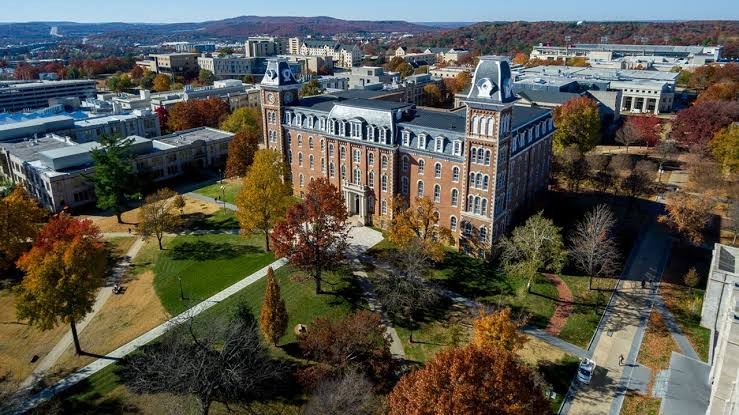
The University of Arkansas at Monticello is a public university located in the heart of southeastern Arkansas, an ecologically rich region renowned for its wetlands, bottomland hardwood forests, and agricultural landscapes that support some of the most important waterfowl populations in North America. The Snowden Waterfowl Center of Excellence is a premier research facility within UAM’s College of Forestry, Agriculture, and Natural Resources (CFANR), dedicated to advancing the scientific understanding of waterfowl biology, migration, and conservation in the Mississippi and Central Flyways.
Benefits of the Assistantship
This assistantship will provide the following to its recipients:
- Annual stipend of $20,000 for the duration of the assistantship (up to 3 years)
- Full tuition waiver for the M.Sc. programme
- Designated office space and computer at the Snowden Waterfowl Center of Excellence
- Hands-on field research experience in waterfowl movement ecology, migration, and habitat use
- Work alongside experienced faculty, staff, and graduate students in a leading waterfowl research centre
- Flexibility in defining specific research objectives in collaboration with the supervising faculty member
- Opportunity to contribute to a first-of-its-kind study on green-winged teal migration ecology in the Mississippi and Central Flyway
- Other benefits
Also Check:
2026 Commonwealth Distance Learning Postgraduate Scholarships – UK
2026 United Nations UNIV’R Postgraduate Scholarship Programme – France
Eligibility Criteria
To be eligible for this assistantship, applicants must meet the following:
- Must hold a Bachelor of Science (B.S.) degree in geospatial sciences, geography, wildlife management or conservation, zoology, or a closely related field
- Must have a minimum cumulative undergraduate GPA of 2.7, OR a minimum GPA of 3.0 in the last 60 semester hours of undergraduate coursework
- Must possess a valid U.S. driver’s license, or be able to obtain one within 60 days of the start date
- Must be willing and able to undertake overnight travel and fall/winter field work as required by the project
- Must be physically able to work outdoors in all weather conditions, including cold and wet environments typical of waterfowl habitats
- Experience with GIS, remote sensing, data science, landscape ecology, and/or waterfowl research is strongly preferred, though not strictly required
- Must be available to start in either May 2026 or August 2026
Note: Kindly check the official webpage for full and detailed requirements
Also Check:
2026 Manaaki New Zealand Government Undergraduate and Postgraduate Scholarships
Selection Criteria
The selection process for this Graduate Research Assistantship is conducted directly by Dr. Douglas Osborne at the Snowden Waterfowl Center of Excellence, and candidates are assessed on both their academic preparation and their practical suitability for a field-intensive, ecologically focused Master’s research project. Academic qualifications form the foundation of the evaluation specifically the applicant’s undergraduate GPA (overall or in the last 60 credit hours), the relevance of their degree discipline to the project, and evidence of coursework or training in wildlife management, ecology, geospatial sciences, or related areas.
How to Apply
CLICK HERE to visit the official webpage and submit your application.